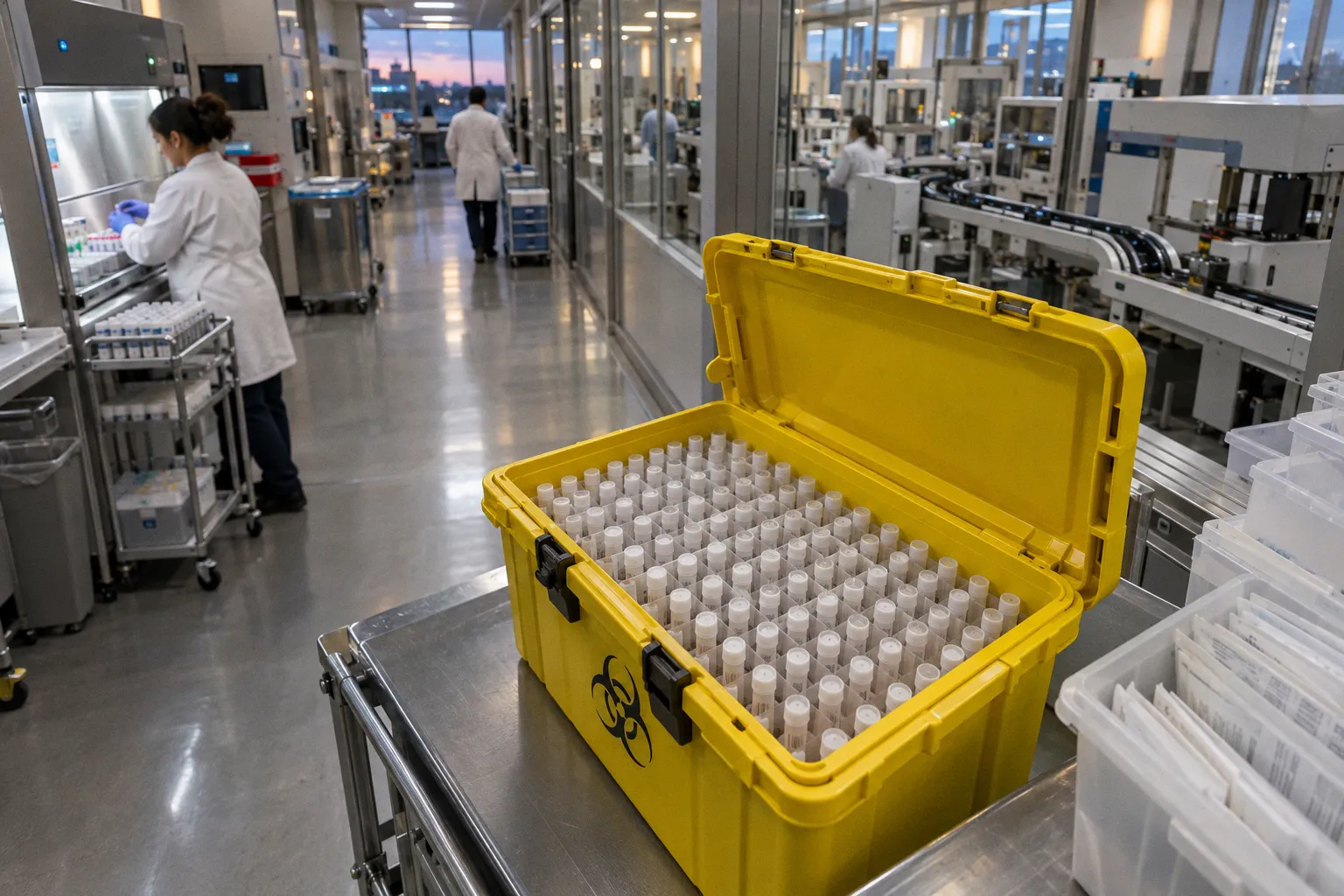
A long-horizon market projection published this month reframes pre-analytical infrastructure as a strategic asset class within molecular diagnostics. According to IndexBox, the molecular diagnostic swab collection systems market is forecast to expand through 2035, with growth attributed to the parallel scaling of polymerase chain reaction and next-generation sequencing testing volumes across clinical laboratories.
The framing carries weight for hospital networks and reference laboratories, where procurement decisions on collection devices now extend well beyond commodity pricing and into the analytical validation envelope of downstream assays.
Pre-analytical infrastructure under tighter analytical thresholds
The forecast's pairing of PCR and NGS expansion points to a structural rebalancing of where clinical laboratories invest their standardization effort. Collection swabs are increasingly evaluated alongside buffer chemistries, flocked versus wound-fiber geometries, and validated transport conditions that preserve nucleic acid integrity under the progressively tighter analytical validation thresholds applied to respiratory pathogen panels, liquid biopsy workflows, and sexually transmitted infection screening.
The implicit trajectory is one in which tolerance for pre-analytical variability contracts as assays become more sensitive. Laboratories weighing vendor consolidation should expect procurement evaluations to gradually mirror the rigor of analytical validation itself — with stability data, interferent profiles, and compatibility with automated extraction platforms migrating from optional technical bulletins to required specifications.
Q2 earnings signal sustained downstream demand
Adjacent sector data reinforces the demand trajectory implied by the IndexBox projection. According to TradingView's review of Q2 results across testing and diagnostics services stocks, the five tracked companies reported aggregate revenues that exceeded analyst consensus by 2.8%, with share prices up an average of 9.4% since the print.
NeoGenomics reported revenues of $201.7 million, up 11.2% year on year and ahead of estimates by 2.2%; shares climbed 30.9% post-report to trade at $17.54. In the company's commentary, CEO Tony Zook stated that the second quarter results reflect the consistent operating and financial performance investors expect from this team. RadNet delivered $622.7 million, up 25% year on year and ahead of consensus by 2.3%, while Labcorp reported $3.73 billion, up 5.8%, in line with expectations. The sector's tailwinds — an aging population, rising prevalence of chronic disease, and the institutionalization of preventive screening — align with the testing volume expansion underpinning the swab collection forecast.
Reimbursement and decentralization as the binding constraints
For pathology and laboratory leaders translating the projection into capital planning, the structural headwinds warrant explicit attention. Industry analysis continues to flag reimbursement uncertainty, competitive pressure from decentralized and at-home testing modalities, and regulatory scrutiny of test validity and cost-effectiveness as the principal constraints on margin expansion across the testing services stack.
Hospitals evaluating long-term swab contracts should map collection-system costs against anticipated reimbursement pathways for the assays those devices will support, particularly as payers tighten coverage for low-yield reflex testing. The gradual integration of automated collection-to-extraction workflows and AI-assisted result interpretation will reposition swab selection as a data infrastructure decision rather than a procurement line item. Laboratories that begin standardization protocols now will be positioned to absorb NGS panel expansions and population-scale screening programs without renegotiating consumable contracts at the point of clinical urgency.