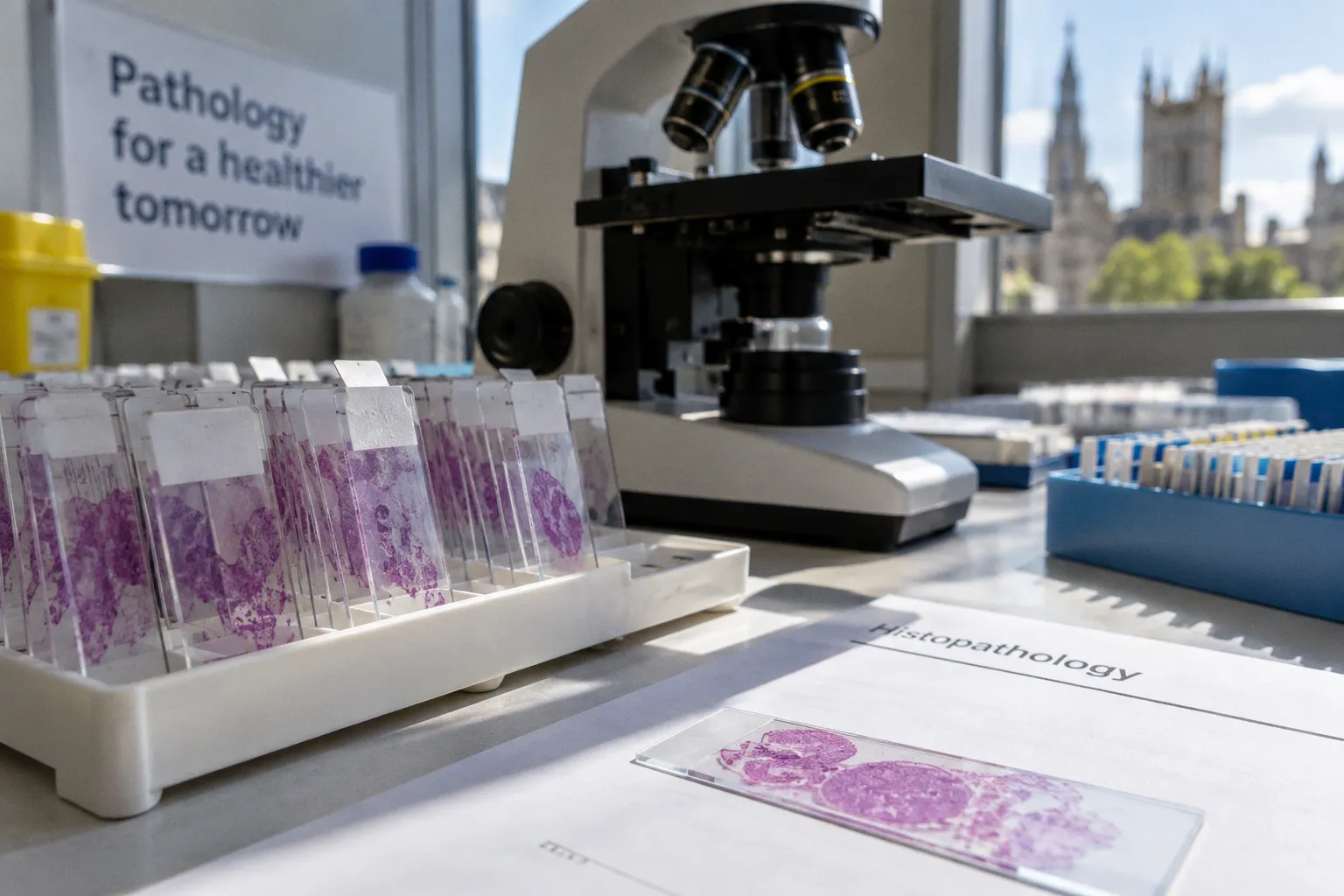
The deployment is intended to accelerate turnaround times, standardize remote pathologist workflows, and enable integrated AI-assisted image analysis. For laboratories and clinical clients, however, the important question is not whether the platform is enterprise-grade. It is whether the deployment reduces operational friction without creating a new layer of validation, governance, and workflow risk.
The bottleneck is workflow, not the scanner
Digital pathology projects often arrive wrapped in familiar language: faster reporting, standardized practice, AI-enabled review. HALO AP is now being positioned inside Source BioScience’s NHS outsourcing operation, where those claims will meet the less glamorous reality of case routing, remote reporting, image access, and service-level pressure.
The confirmed scope is specific. Source BioScience has implemented HALO AP to support outsourced histopathology and cellular pathology services for the UK NHS. The stated aims are to accelerate turnaround times, standardize remote pathologist workflows, and enable integrated AI-assisted image analysis.
That is a credible operational target. Outsourced services need consistent handling across cases and reporting teams, particularly when pathologists are working remotely. A shared enterprise platform can, in principle, reduce the friction between image management and diagnostic review.
But “aims to accelerate” is not the same as demonstrated acceleration. The available information does not provide turnaround-time figures, deployment milestones, case volumes, user numbers, or comparative performance before and after implementation. There is also no confirmed detail on which AI tools will be used, for what indications, or how their outputs will be incorporated into diagnostic sign-off.
For lab managers, that missing detail is not a footnote. It is the deployment.
What NHS clients should verify
The announcement establishes the platform and its intended role. It does not establish that every part of the workflow is clinically validated or operationally mature. NHS clients and pathology providers should therefore separate three questions that vendor-led announcements often blend together.
First: does the platform support the required reporting workflow? That means more than displaying whole-slide images. The relevant test is whether remote pathologists can access cases reliably, review the necessary material, document findings, and complete reporting without avoidable handoffs. The announcement says HALO AP will standardize remote pathologist workflows, but does not specify how that standardization is implemented.
Second: what exactly does AI-assisted image analysis do in this deployment? “Integrated” can describe a useful clinical tool, a research function, or a future configuration. The confirmed information does not identify algorithms, intended uses, validation data, or whether AI output is advisory or embedded in a formal reporting process. Those distinctions matter because algorithmic bias and weak workflow integration do not disappear when the software is installed.
Third: how will performance be measured? A serious deployment should make its operational claims testable. Relevant evidence would include turnaround-time monitoring, exception handling, image-quality failures, user adoption, and the effect of remote workflows on reporting consistency. None of those measures is provided here.
This is also where clients should resist treating digital pathology as a single product decision. The platform may be capable of supporting the service, but clinical value depends on the surrounding deployment: governance, staffing, validation, support, and the practical route from specimen to report.
A platform decision, not a clinical outcome
The significance of Source BioScience’s move is therefore architectural rather than diagnostic. It places an enterprise digital pathology platform inside an NHS outsourcing service and signals an effort to make remote pathology workflows more standardized while leaving room for AI-assisted analysis.
That could matter to laboratories managing distributed teams or seeking to scale outsourced histopathology services. It could also introduce new dependencies. If access, configuration, or algorithmic tools become central to reporting, then platform performance becomes part of the service’s clinical risk profile.
The current evidence supports a cautious conclusion. HALO AP is deployed for the stated Source BioScience use case, and its intended functions are clear at a high level. The evidence does not yet show that it improves turnaround times, delivers more consistent reporting, or produces a validated clinical benefit.
For pathology operations, the verdict is binary: the platform is ready to be evaluated in deployment, not ready to be credited with clinical impact.