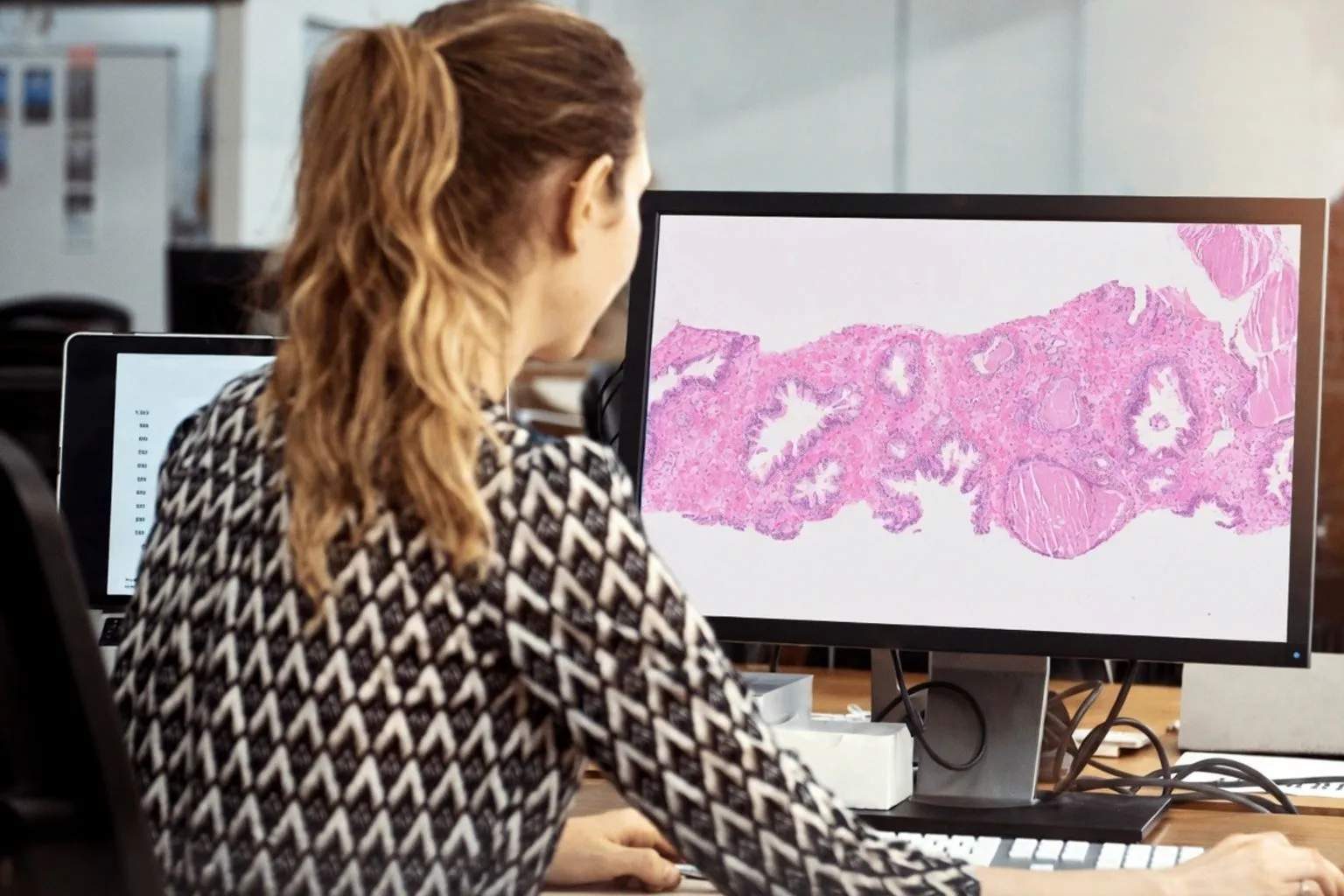
Several Unilabs sites have already deployed Concentriq AP-Dx for routine diagnostic case reviews, with additional countries scheduled to go live before the end of the year.
Operational footprint at stake
Unilabs' pathology operation encompasses more than 350 pathology experts and 400 laboratory technicians across 12 countries, evaluating approximately 9 million tissue sections annually, according to company data. Concentriq is intended to centralize those distributed teams, laboratory sites, diagnostic data, and artificial intelligence applications within a single enterprise software environment, allowing affiliated hospitals and healthcare institutions across Europe to access subspecialty expertise without the geographic segmentation that has historically constrained large diagnostic networks. Across its broader operations, Unilabs employs more than 13,000 personnel, operates 1,300 laboratories, and runs more than 2,100 sample collection sites across four continents, performing 237 million clinical laboratory tests, 6 million diagnostic imaging examinations, and 9 million pathology section analyses for approximately 250 million patients each year.
Interoperability as the strategic differentiator
The platform is engineered for interoperability with third-party AI applications — a design posture that aligns with the broader shift toward image-based companion diagnostics and computational biomarker stratification. Proscia CEO David West, in a release, described the partnership as "establishing a blueprint for the future, which laboratories around the world will follow," positioning Concentriq as enterprise infrastructure rather than a closed single-vendor workflow. The architecture matters: as pathology testing migrates toward molecularly informed and AI-augmented case review, the ability to plug in validated algorithms without re-engineering the surrounding LIS and reporting stack will determine how quickly new diagnostic methods reach routine practice.
What to monitor
The announcement lands alongside two converging market signals worth contextualizing. Analysts tracked by openPR project the digital pathology segment to reach US$6.82 billion by 2035, while a separate forecast published via Yahoo Finance UK sizes the in vitro diagnostics market at US$170.10 billion by 2031, expanding at a 7.7% CAGR. For referring clinicians and partner laboratories, the operative endpoints are which countries complete rollout on schedule, how AI-assisted case review is documented within signed-out pathology reports, and whether turnaround time and inter-observer concordance show measurable gains once the centralized subspecialty consultation model is fully active — the variables that will determine whether the deployment translates into the precision medicine workflow improvements both companies are positioning it to deliver.