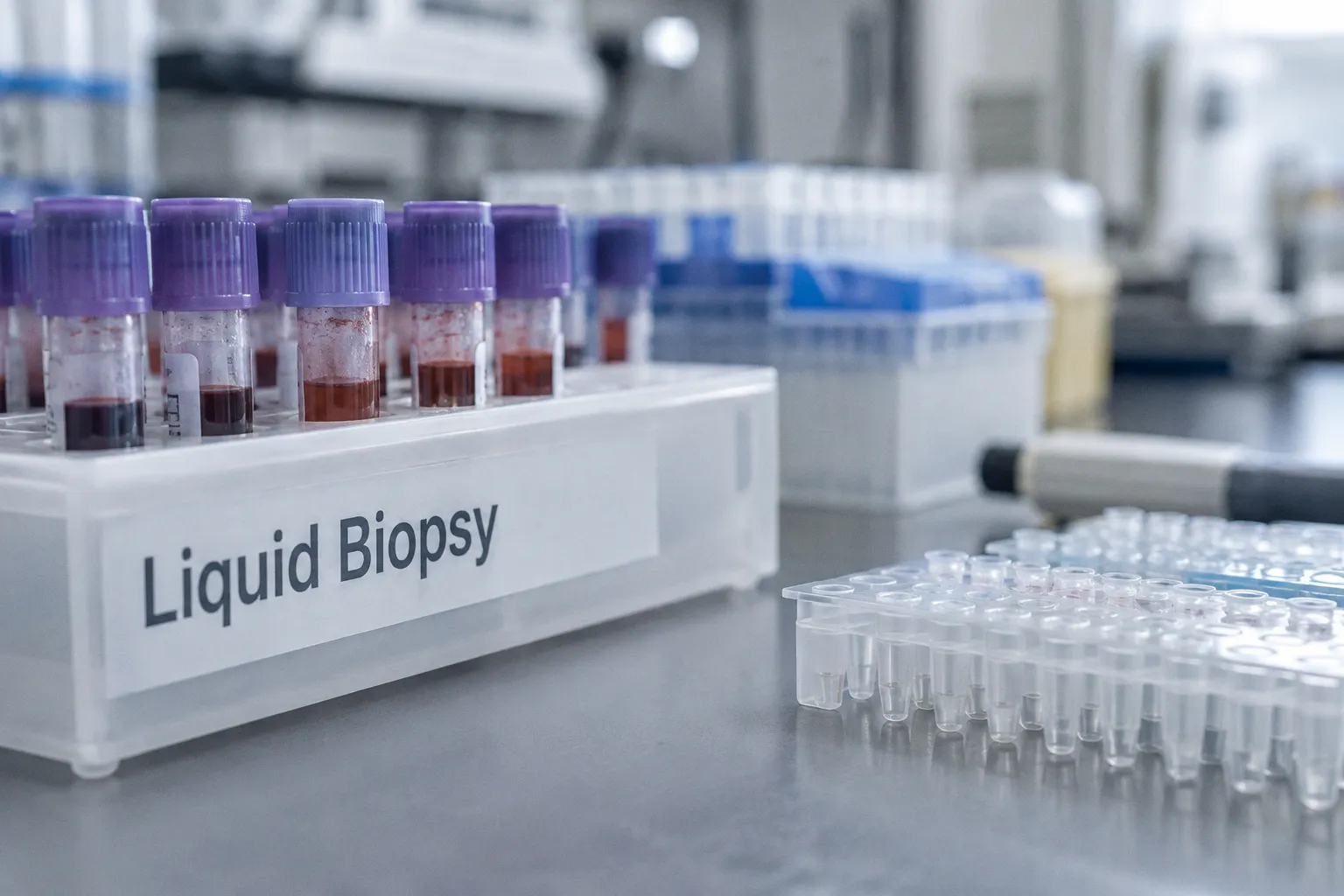
Guardant Health and Collaborators Present 20 Abstracts on Liquid Biopsy and Methylation-Based Lung Cancer Classification
According to BioSpace, Guardant Health and its collaborators are scheduled to present 20 abstracts at the 2026 World Conference on Lung Cancer, covering liquid biopsy tests intended for early detection and ongoing treatment management. A separate report carried by MarketScreener describes the program as including advances in methylation-based tumor classification for lung cancer. For molecular pathology and laboratory medicine, the significance is not the number of abstracts alone, but the breadth of clinical use cases being associated with a single liquid-biopsy portfolio.
A broad agenda, but limited public detail
The available source material does not provide study-level data, cohort sizes, sensitivity or specificity estimates, comparator methods, follow-up periods, or regulatory status. It therefore does not support a conclusion that any individual assay has demonstrated clinical efficacy or is ready for routine deployment.
What is confirmed is the scope of the planned presentation: liquid biopsy testing is being positioned across two distinct points in the lung-cancer pathway—early detection and treatment management—while methylation-based classification is identified as another area of development. These are analytically and operationally different applications, and they should not be treated as interchangeable merely because they use blood-based testing.
For laboratories, the distinction is material. A test designed to classify a tumor may address a different reporting question from one intended to detect disease earlier or monitor a patient during treatment. The relevant specimen requirements, validation framework, result interpretation, and clinical decision pathway would need to be assessed separately for each intended use.
What laboratories and clinical clients should verify
Until the abstracts or full study reports are available, the practical review should remain document-led. Laboratories evaluating the technology would need to identify the exact assay or assay family discussed in each presentation, its intended-use statement, and the evidence supporting that use. The current snippets do not establish whether the tests are investigational, commercially available, or cleared or approved for any particular indication.
The same caution applies to methylation-based tumor classification. The event title indicates that the approach is part of the presented research portfolio, but it does not specify the classification targets, the reference standard, or how results would affect pathology reporting and clinical management.
Before a patient-facing or procurement decision, clinical organizations should therefore seek the underlying abstract, analytical-validation materials, sample-handling requirements, reporting format, and any stated limitations. They should also determine whether the proposed workflow requires integration with existing pathology, oncology, or molecular laboratory systems. None of these operational details is contained in the available evidence.
The signal for molecular diagnostics
The conference program nevertheless marks a clear development direction: commercial liquid biopsy platforms are being presented not as a single-purpose technology, but as a set of applications spanning detection, classification, and treatment management. That creates a potentially important workflow question for laboratories—whether future adoption will involve one consolidated platform or multiple assays with separate validation and governance requirements.
A Market.us Media headline separately projects 8.1% compound annual growth for the lung-cancer PCR panel market through 2034, but that market forecast does not establish performance or demand for Guardant Health’s program and should not be used as clinical evidence.
The next meaningful data point will be the content of the 20 abstracts themselves. Until study-level methodology and performance measures are disclosed, the announcement is best treated as a research and pipeline signal—not as confirmation of diagnostic efficacy, clinical utility, or regulatory readiness.