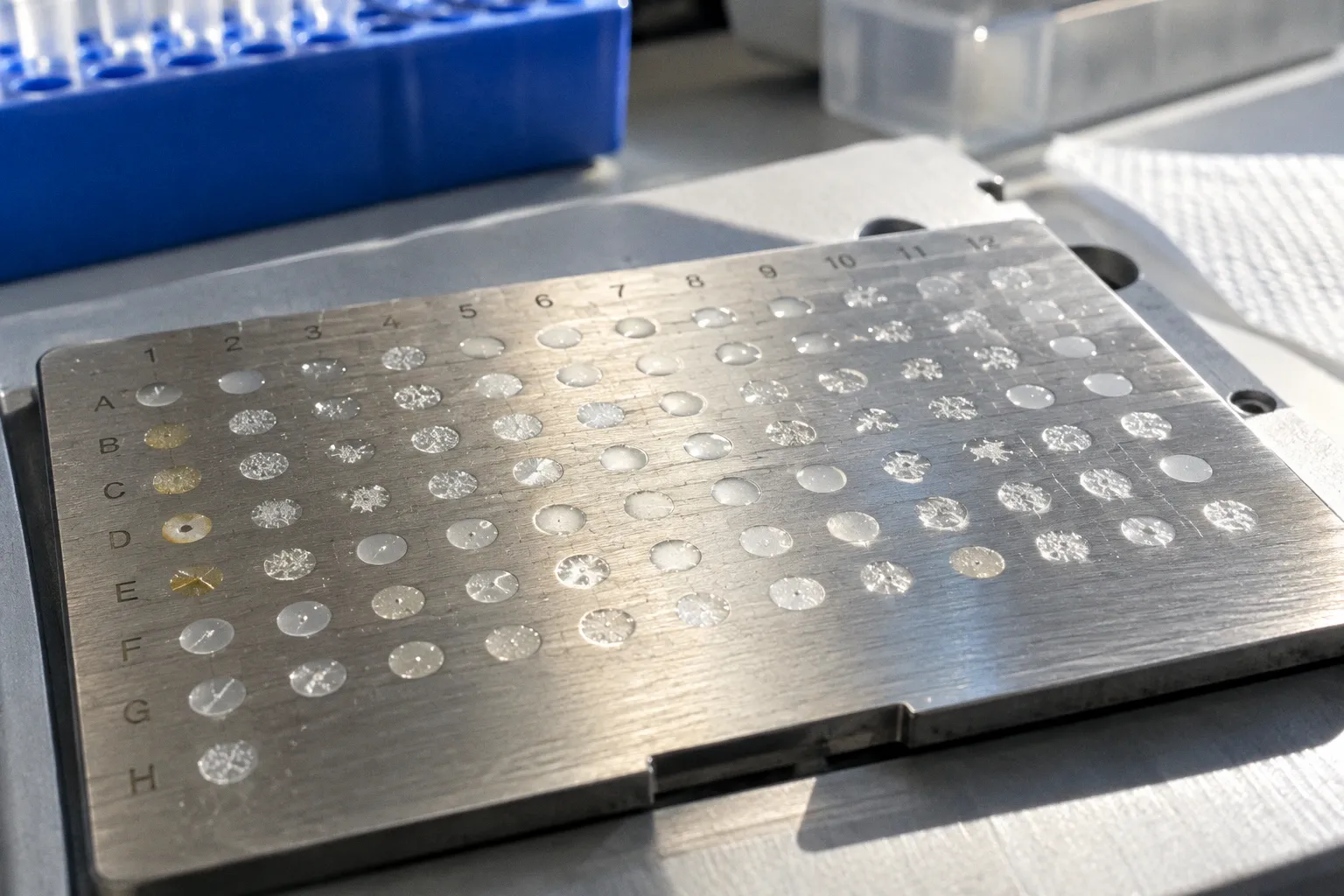
The bottle flags, the worklist shifts, and the clock starts to matter in a very practical way: every hour before organism identification can delay the next clinical decision. Traditional biochemical identification may require 18–24 hours after growth, sometimes longer when the organism is slow, mixed, or simply uncooperative.
MALDI-TOF MS changes the shape of that wait. With a well-prepared isolated colony, identification can move from an overnight exercise to a result generated within minutes. With selected direct-from-blood-culture protocols, the preparation and acquisition step may take only 10–20 minutes per sample. But the instrument is not a shortcut around microbiology. It is a highly capable part of a larger culture, preparation, interpretation, and reporting process.
That distinction matters. The strongest MALDI-TOF MS identification workflow optimization is not about pressing the acquisition button faster. It is about removing the quiet delays around it: unnecessary incubation, inconsistent target preparation, avoidable repeat runs, poorly matched protocols, and a handoff that leaves a technically valid result waiting in a queue.
The real time savings begin before the spectrum
The headline comparison is straightforward. Conventional automated biochemical identification can take 18–24 hours for routine microorganisms. MALDI-TOF MS can reduce that identification time by approximately 24 hours, depending on the specimen type, culture status, organism, preparation method, and laboratory schedule.
That is the part most people see. Bench technologists see the rest.
A colony must be sufficiently mature. The target has to be placed cleanly. The matrix has to interact with the sample as intended. The spectrum must be strong enough for the library to recognize, and the score must be interpreted in the context of the culture plate, Gram stain, specimen type, and clinical setting. A fast acquisition cannot rescue a weak colony choice or a mixed culture.
This is why improving pathogen identification speed is best approached as a workflow problem rather than an instrument problem. The most useful questions are often operational:
- When does a positive culture become visible to the team?
- How quickly can it move from the incubator to preparation?
- Which samples qualify for direct identification?
- When does a technologist repeat preparation, and when does the case need subculture?
- Are low scores caused by the organism, the preparation method, the target, or the library?
- Does the reporting process release the result as soon as the identification is technically and clinically defensible?
In a busy laboratory, these details accumulate. A specimen that waits through one shift change, one batch cycle, and one repeat preparation can lose the advantage the instrument was meant to provide.
MALDI-TOF MS does not remove the need for microbiology judgment; it makes that judgment more consequential because the result arrives sooner.
The instrument’s speed is most valuable when the surrounding workflow is ready to use it. Continuous blood culture incubation, clear escalation rules, and a prepared response to an uninterpretable spectrum often matter as much as the acquisition time itself.
Direct identification from positive blood cultures
Direct identification from a positive blood culture is one of the most attractive ways to reduce microbial identification turnaround time. Instead of waiting for a clean colony on solid media, the laboratory processes material from the positive bottle and attempts to obtain a usable spectrum directly.
The basic logic is simple: separate or concentrate the microbial cells, remove as much interfering blood culture material as possible, apply the preparation to the target, and acquire the spectrum. In practice, the details are where the work lives.
Density centrifugation and chemical lysis-extraction are among the approaches used to improve the signal. Direct lysis-extraction preparation can have a reagent cost of less than $0.1 per sample, although the true economic picture still depends on labor, equipment, local workflow, repeat rates, and library maintenance. A low consumable cost is useful, but it should not be mistaken for a complete cost model.
Studies of direct identification from positive blood cultures have reported identification rates of 87.60% with scores of at least 1.700 after density centrifugation or chemical lysis-extraction, with approximately 10–20 minutes required per sample. Those numbers describe a defined workflow and should not be treated as a universal expectation for every organism or specimen.
The limitations are familiar to anyone who has worked with positive blood cultures. A bottle may contain a low microbial burden, a mixture of organisms, or a species whose protein profile is not well represented in the available library. Blood products and media components can suppress or complicate the spectrum. A result that looks convincing numerically may still need to be reconciled with the Gram stain and the clinical context.
A practical preparation sequence
For laboratories refining a direct workflow, the most useful approach is usually to standardize the decisions around the preparation rather than force every positive bottle through one identical procedure.
1. Confirm the positive bottle context.
The Gram stain remains an essential first orientation point. A bottle showing mixed morphologies should not be treated like a straightforward monomicrobial specimen simply because the instrument produces a score.
2. Use a separation or extraction method that matches the specimen burden.
Density centrifugation may help concentrate cells, while lysis-extraction can reduce interfering material. The laboratory should define how much residual blood culture material is acceptable before target application.
3. Keep the target preparation consistent.
Uneven smears, excessive material, incomplete matrix coverage, or contamination between spots can all create troubleshooting work later. A repeatable hands-on method is often more valuable than a theoretically faster but variable one.
4. Set an explicit pathway for weak or discordant results.
A low score, an unexpected identification, or a mismatch with the Gram stain should trigger a defined next step: repeat preparation, extraction, short incubation, or conventional subculture.
5. Link identification to the next test rather than treating it as the endpoint.
Identification may support early clinical communication, but it does not automatically replace phenotypic antimicrobial susceptibility testing. MALDI-TOF MS can accelerate the organism call while AST continues through its established process.
That last point is important. Direct identification is not a universal substitute for subculture or susceptibility testing, and it should not be presented as one. The laboratory is shortening the path to organism identity, not erasing every downstream requirement.
Short-incubation subcultures: the useful middle ground
Direct-from-bottle workflows are not always the best answer. When the direct spectrum is weak, when the culture appears mixed, or when the organism requires a cleaner colony context, a short-incubation subculture can provide a more dependable compromise.
A 6–8-hour incubation period may be enough to produce material for MALDI-TOF MS in selected workflows. Reported species-level identification rates for short-incubation isolates range from 80% to 84% across VITEK MS PRIME and Bruker Biotyper platforms. That is a meaningful improvement over waiting for a conventional overnight culture, but it is not a guarantee of successful identification for every organism.
The value of short incubation lies in its balance. The plate has had time to provide a more concentrated and interpretable microbial target, while the laboratory avoids the full delay of a standard schedule. For many routine bacterial isolates, that can turn a next-day identification into a same-day result.
The bench-level nuance is in deciding when to trust the early growth. A sparse or irregular colony may not provide enough material. A plate with more than one morphology demands separation. Some organisms will behave well under a short protocol, while others will remain better suited to conventional incubation and preparation. The workflow should therefore distinguish between:
| Workflow point | Main advantage | Main limitation | Best use |
|---|---|---|---|
| Direct positive blood culture identification | Can provide an organism call in about 10–20 minutes after preparation | Vulnerable to mixed cultures, low burden, and matrix interference | Selected positive bottles with a clear Gram-stain context |
| Short-incubation subculture | Produces a cleaner target while avoiding a full overnight delay | Species-level success is not universal; some colonies remain too sparse | Positive cultures needing a more reliable colony-based target |
| Conventional isolated-colony preparation | Familiar, broadly applicable, and easier to interpret in a pure culture | May add 18–24 hours compared with faster identification pathways | Routine or complex cultures where early methods are unsuitable |
The table is not a competition between methods. It is a reminder that a mature laboratory uses more than one route. The fastest method is not always the method that produces the most useful result on the first attempt.
MALDI-TOF sample preparation best practices are mostly about consistency
MALDI-TOF MS is often described as automated, but the sample still arrives at the target through human hands. That preparation step deserves respect. It is small in physical scale and large in analytical consequence.
Direct transfer is efficient when the isolate is robust and the colony material is suitable. Formic acid extraction may improve performance when the organism or sample requires a more intensive preparation. The choice should be guided by the local organism mix and by the laboratory’s own experience with repeat rates, not by a single universal rule.
Several habits support a cleaner workflow:
- Use a consistent amount of colony material rather than creating visibly thick or uneven deposits.
- Avoid carrying agar, excess medium, or neighboring colony material onto the target.
- Apply matrix in a controlled way and allow the spot to dry as required by the validated procedure.
- Record which preparation method was used when a result is weak or unexpected; troubleshooting is much harder when every attempt looks identical on paper.
- Use extraction selectively, especially for isolates that repeatedly produce poor spectra with direct transfer.
- Keep the target-cleaning and slide-handling process aligned with the platform’s validated instructions.
- Treat multiple-target preparation as a workflow design issue, not merely a matter of moving faster with the same technique.
Automated slide handling can reduce repetitive manual work, especially in laboratories processing a high number of targets. Yet automation introduces its own points of attention: loading sequence, spot recognition, carryover control, failed positions, and the time required to remove and reprocess a target.
The most effective laboratories I have encountered tend to make these decisions visible. They define which samples can proceed automatically, which require technologist review, and which are routed out of the fast lane before they consume multiple unsuccessful acquisition attempts.
Platform timing is shaped by the whole target process
Comparisons between MALDI-TOF platforms often focus on acquisition, but the practical difference may sit in target preparation and slide handling. In comparative workflow evaluations, multi-target processing on the VITEK MS PRIME using PICKME nib or loop preparation required approximately 39–40 minutes of hands-on time, compared with about 53 minutes on the Bruker Biotyper workflow evaluated in the same context.
Those figures are useful for planning, but they should not be interpreted as permanent rankings. Hands-on time depends on the number of targets, the preparation method, the operator, the degree of automation, and the way the laboratory batches work. A platform that is efficient for one laboratory’s specimen mix may not produce the same operational advantage in another.
The important question is not simply which system is faster in a published comparison. It is where time is being spent in the local process.
Map the work around the instrument
A useful internal review can follow the specimen from positivity to report:
1. Detection: Is the blood culture monitored continuously, or does the laboratory rely on scheduled review points?
2. Triage: Are positive bottles immediately classified by Gram stain and routed to the appropriate identification pathway?
3. Preparation: How long does the sample wait before target preparation begins?
4. Acquisition: Are targets run continuously, in batches, or only at designated times?
5. Interpretation: Who reviews low scores, unexpected species calls, and mixed-culture concerns?
6. Communication: Is the preliminary identification transmitted promptly to the clinical team?
7. Follow-through: Does the organism identification automatically trigger the appropriate AST and confirmatory work?
This kind of mapping often reveals delays that are invisible in the instrument’s own software. A laboratory may have a rapid acquisition method but a batch schedule that holds the result for hours. Another may have a strong direct protocol but no clear rule for communicating an identification that precedes susceptibility data.
A workflow should be designed around the clinical meaning of the result. An early bacterial identification from a blood culture can be valuable even when AST is still pending, provided the communication is clear and the result is reported within the laboratory’s validated framework.
Continuous incubation and batch testing: where larger gains appear
The largest reported reductions in identification time come from combining continuous blood culture incubation with a deliberate MALDI-TOF MS testing schedule. In workflow models using continuous incubation alongside 24-hour batch-wise MALDI-TOF testing, bacterial species reporting time was reduced by up to 58.7 hours compared with standard schedule processing.
That number is striking because it exposes a common source of delay: the calendar. If a positive bottle is detected promptly but waits for the next routine batch, the laboratory loses part of the advantage of rapid identification. Continuous incubation brings the signal forward; the testing schedule determines whether the laboratory can act on it.
Batch-wise testing is not inherently inefficient. It may be the right choice for staffing, workload balance, or equipment access. But the batch interval should be an intentional operational decision, not an inherited habit. If the laboratory’s goal is to reduce turnaround time, it should examine whether batch timing supports that goal across shifts, weekends, and periods of high volume.
This is also where total laboratory automation can help. Automated incubation, specimen movement, image management, and instrument integration may reduce the amount of manual tracking required between positivity and identification. Automation does not remove the need for technologists. It changes where their attention is most valuable: selecting the right pathway, reviewing exceptions, interpreting discordance, and protecting the patient from an overconfident result.
The fastest workflow is not the one with the fewest human steps. It is the one that saves human attention for the steps that require judgment.
Troubleshooting spectral quality without losing the day
Poor spectral quality is one of the most frustrating forms of delay because it can send a simple isolate into repeated preparation. A second attempt may solve the problem, but repeated attempts without a diagnostic question rarely improve the process.
When troubleshooting MALDI-TOF spectral quality, I would start with the specimen rather than the instrument. Ask what the culture plate is actually showing. Is the colony young, mixed, mucoid, pigmented, sparse, or surrounded by material that could have been carried onto the target? Does the Gram stain agree with the expected organism? Is the sample from a direct blood-culture preparation where residual matrix interference is plausible?
The next step is to examine the preparation history. A direct transfer that produces a weak result may justify a formic acid extraction. A direct blood-culture attempt may need concentration or lysis-extraction. A short-incubation plate may need more growth, or it may need isolation before identification.
A practical troubleshooting sequence might look like this:
- Check the culture context: purity, morphology, Gram stain, and specimen type.
- Review the target spot: amount of material, matrix coverage, visible crystallization, and possible carryover.
- Repeat with a controlled change: do not repeat the same preparation blindly if the first attempt failed.
- Escalate to extraction or short incubation: use the next validated method rather than improvising at the bench.
- Review the library and score interpretation: a technically good spectrum can still produce a limited or unexpected match.
- Compare with orthogonal evidence: conventional biochemistry, molecular testing, or sequencing may be appropriate for unresolved cases.
The point is not to make every spectrum produce a species name. The point is to know when the spectrum is telling you something useful and when the laboratory needs to step back into a more deliberate identification pathway.
Building a faster workflow without making it fragile
Speed and accuracy are not opposing values, but they can pull against each other when a laboratory is under pressure. A protocol that is fast only when every specimen behaves perfectly will not remain fast at scale. The better design is resilient: it has a primary route, a clear fallback, and a way to recognize exceptions early.
For most laboratories, the improvement plan does not need to begin with a complete redesign. It can begin with a small set of operational questions:
- Which positive blood cultures are currently waiting for the next scheduled processing window?
- Which organisms repeatedly require repeat target preparation?
- How often is short incubation being used, and for which culture types?
- Are low-score results being caused by preparation variation or by genuine organism limitations?
- Is direct identification being attempted in polymicrobial contexts where interpretation is likely to be difficult?
- How quickly are valid species identifications communicated before AST is complete?
- Does the laboratory track time from positivity to identification separately from instrument acquisition time?
That final distinction is essential. Instrument time is only one slice of turnaround time. A laboratory can have a method that acquires spectra in minutes and still report the result much later because of transport, batching, review, or communication delays.
MALDI-TOF mass spectrometry has earned its place in clinical microbiology because it compresses a familiar identification problem without pretending that the culture has become irrelevant. The instrument rewards good isolation, thoughtful preparation, disciplined interpretation, and a team that understands where speed helps and where caution protects the result.
The practical takeaway is therefore modest, but powerful: optimize the entire path from positive signal to clinically usable identification. Use direct lysis-extraction when the bottle and the organism make it sensible. Use short-incubation subcultures when a cleaner target will improve confidence. Compare platform timing at the level of hands-on work, not just acquisition. And build a troubleshooting pathway that changes the preparation intelligently instead of repeating it by reflex.
That is how a laboratory reduces turnaround time without reducing microbiology to a button press.